
Even candidates who speak English confidently in everyday conversation can freeze up in an interview, simply because interview English uses a specific, more formal set of phrases. This guide collects the most useful English phrases for every stage of a job interview from greetings to salary discussions so you always have the right words ready, no matter where in the world you're interviewing.

Interviews are a formal type of conversation, and using natural, professional phrases rather than overly casual or overly stiff language helps you sound confident and fluent. Having a set of go-to phrases ready also reduces anxiety, since you're not searching for words in the moment; you're simply applying language you've already practiced.
| Situation | Useful Phrase |
|---|---|
| Arriving / starting the call | "Good morning/afternoon, thank you for having me." |
| Responding to "How are you?" | "I'm doing well, thank you — and yourself?" |
| Small talk before the interview starts | "I really appreciate you taking the time to meet with me today." |
| Introducing yourself | "It's a pleasure to meet you. My name is..." |

Interview fluency isn't about big vocabulary — it's about having a handful of clear, natural phrases ready for every part of the conversation.
| Purpose | Useful Phrase |
|---|---|
| Buying a moment to think | "That's a great question — let me think about that for a moment." |
| Discussing a weakness | "One area I've been actively working to improve is..." |
| Explaining a gap or setback | "During that time, I focused on..." |
| Politely disagreeing | "I see it a little differently — in my experience..." |
| Asking for clarification | "Could you clarify what you mean by...?" |

Do I need advanced English vocabulary for interviews?
No. Clear, simple, well-practiced phrases are far more effective than complex vocabulary used awkwardly or incorrectly.
What's a good phrase to use if I don't understand a question?
Try "Could you clarify what you mean by...?" or "Would you mind rephrasing that question?" — both sound professional and confident.
How should I talk about salary in English?
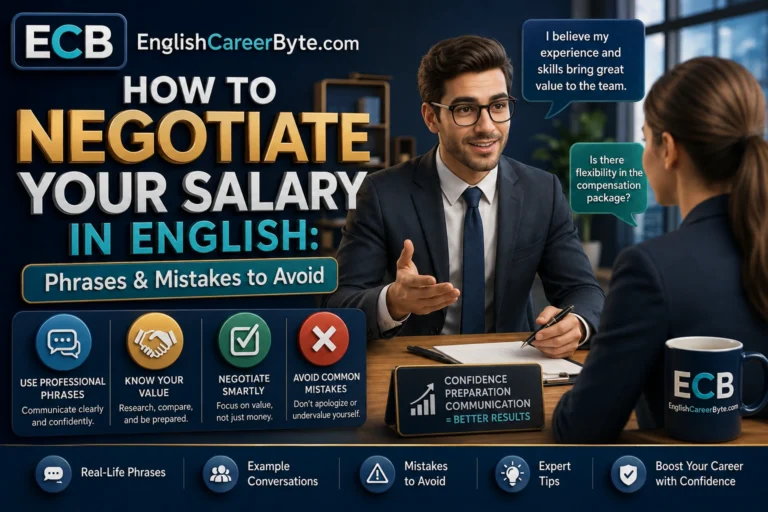
Give a researched range rather than a single number, and use phrases like "I'm open to discussing the full package" to stay flexible.
What should I say at the very end of the interview?
Thank the interviewer, express genuine interest in the role, and ask about next steps — for example, "What are the next steps in the process?"
Are there phrases I should avoid completely?
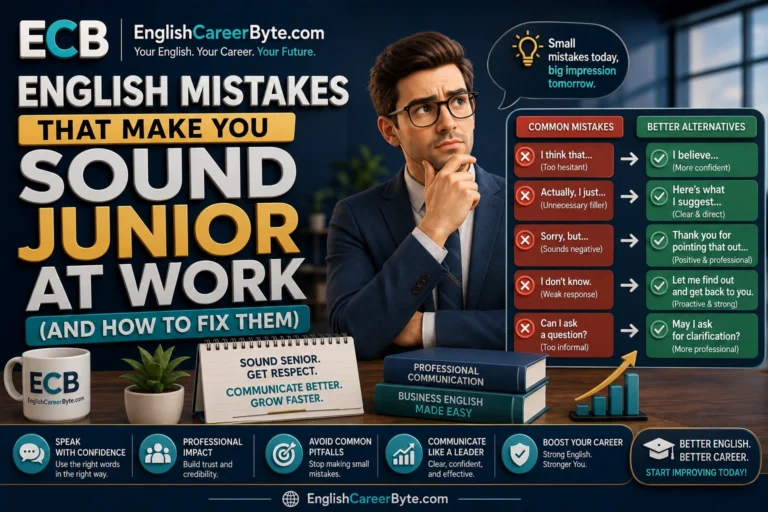
Avoid overly casual slang, uncertain language like "maybe" or "I guess," and defensive phrases that shift blame.
Preparing a set of go-to phrases for each stage of the interview — greeting, discussing experience, handling difficult questions, and closing — takes away much of the anxiety around finding the right words in the moment. Practice these phrases out loud until they feel natural. For further vocabulary and pronunciation practice tailored to workplace English, BBC Learning English's Business English section is a helpful resource to explore.
“




5 Responses