


Whether you're interviewing for your first job or your tenth, the same core questions tend to come up again and again just phrased differently depending on the company and industry. This guide walks through 30 of the most common interview questions in English, organized by category, with short strategies and sample answer directions for each so you can prepare with confidence for any interview, anywhere in the world.
Don't try to memorize 30 scripted answers word-for-word interviewers can tell, and it makes your responses sound stiff. Instead, use this list to understand what each question is really asking, then prepare a few key talking points for each category that you can adapt naturally in the moment.
1. Tell me about yourself.
Use a Present-Past-Future structure: current role, relevant background, and why you're interested in this position.
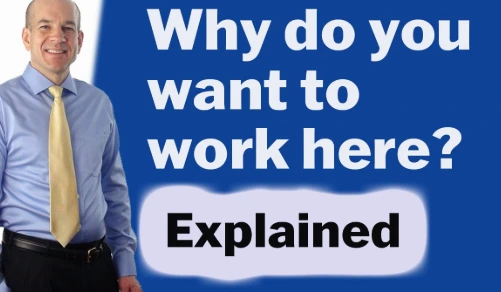
2. Why do you want to work here?
Reference something specific about the company's mission, products, or culture — generic answers stand out for the wrong reasons.
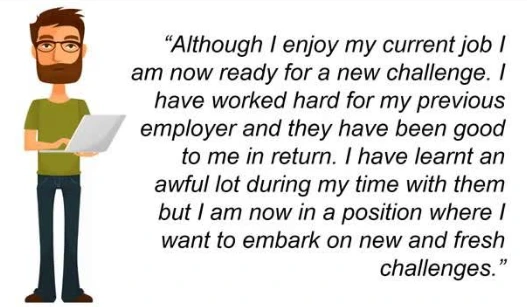
3. Why are you leaving your current job?
Stay positive and forward-looking; focus on what you're moving toward, not what you're escaping.
4. What do you know about our company?
Show you've researched their products, recent news, or values — this signals genuine interest.
5. Where do you see yourself in five years?
Connect your goals to realistic growth within this role or field, not an unrelated career path.
6. What are your salary expectations?
Give a researched range rather than a single number, and mention you're open to discussion based on the full package.
7. Why should we hire you?
Summarize your top 2-3 strengths and connect them directly to the job requirements.
8. What are your strengths?
Choose strengths relevant to the role and back each one with a brief example.
9. What is your biggest weakness?
Choose a real but non-critical weakness and explain the concrete steps you're taking to improve it.
10. How did you hear about this position?
A simple, honest answer is fine — job board, referral, LinkedIn — but add a sentence on why it caught your attention.

Behavioral questions ask about past situations to predict future behavior. Structure your answers using STAR: Situation, Task, Action, Result.
11. Tell me about a time you faced a challenge at work.
Pick a real, specific example and clearly explain the action you took and the measurable result.
12. Describe a time you worked as part of a team.
Highlight your specific contribution, not just the team's overall success.
13. Tell me about a time you failed.
Be honest, focus on what you learned, and end with how it changed your approach going forward.
14. Describe a conflict with a coworker and how you resolved it.
Focus on calm communication and a positive resolution, avoiding blame.
15. Tell me about a time you had to meet a tight deadline.
Emphasize prioritization and organization skills, with a concrete outcome.
16. Describe a time you showed leadership.
This doesn't require a formal title — showing initiative or guiding others counts.
17. Tell me about a time you disagreed with your manager.
Show respectful communication and a constructive outcome, not just being right.
18. Describe a time you had to learn something quickly.
Highlight adaptability and the resources you used to get up to speed.
The best interview answers aren't the longest ones — they're the ones with a clear structure and a specific, memorable result.
19. What interests you about this specific role?
Connect the day-to-day responsibilities of the job to your own skills and interests.
20. What would you do in your first 90 days?
Mention learning the team and processes first, then contributing early wins.
21. How do you prioritize your work when you have multiple deadlines?
Describe a simple system you use — lists, urgency vs. importance, or communication with your manager.
22. What management style works best for you?
Be honest but flexible; show you can adapt to different working styles.
23. How do you handle feedback or criticism?
Show openness to feedback as a tool for growth, with a brief real example.
24. What tools or software are you experienced with?
List tools directly relevant to the job description first.
25. How do you stay updated in your field?
Mention specific resources — courses, newsletters, communities — to show genuine engagement.
26. Are you interviewing with other companies?
Honesty is fine, but keep the focus on your strong interest in this specific role.
27. What is your ideal work environment?
Align your answer with what you know about this company's culture, if possible.
28. What questions do you have for us?
Always have 2-3 thoughtful questions ready about the team, expectations, or growth opportunities.
29. Can you walk me through your resume?
Summarize career highlights briefly and chronologically, focusing on relevance to this role.
30. Why is there a gap in your employment history?
Answer honestly and briefly, then pivot quickly to what you did during that time and what you're bringing now.
Do I need to prepare answers for all 30 questions?
No. Focus on understanding the categories — background, behavioral, role-specific, and closing — and prepare flexible talking points rather than exact scripts for each one.
What is the STAR method?
STAR stands for Situation, Task, Action, Result. It's a simple structure for answering behavioral interview questions clearly and with evidence.
How should I answer "What is your biggest weakness?"
Choose a real, non-critical weakness and explain the specific steps you are taking to improve it, rather than giving a disguised strength.
Should I ask questions at the end of the interview?
Yes. Always prepare 2-3 thoughtful questions about the role, team, or company — it shows genuine interest and engagement.
How do I answer questions about employment gaps?
Be honest and brief about the gap, then quickly shift focus to what you learned or did during that time and what you bring to the role now.
Interview questions may vary in wording, but they almost always fall into a handful of predictable categories. By preparing flexible talking points for background, behavioral, role-specific, and closing questions, you'll be ready to handle nearly any variation with confidence. For an additional, regularly updated list of common questions, Glassdoor's interview questions guide is a useful resource to review alongside this one.
“



3 Responses