IELTS Preparation Course 2026 | Band 7+ Guaranteed | EnglishCareerByte
0Students Enrolled
0% Band 7+ Success Rate
0Countries Accepting IELTS
0Weeks Average to Band 7
😤 Why Students Fail IELTS

The Real Reasons You're Stuck Below Band 6.5

Most IELTS students fail not because they lack English they fail because nobody told them the actual exam strategy. Here's what's really going wrong, and exactly how we fix it.

😰

Running Out of Time in Reading

60 minutes, 40 questions, 2,500+ words of dense academic text. Most students waste 20 minutes on Section 3 alone and leave questions blank.

We teach the Skim-Scan-Answer method: identify question types, locate keywords, answer in order. Our students finish with 5 minutes to spare.
✍️

Writing Task 2 Below Band 6

Generic ideas, repetitive vocabulary, weak thesis statements, and paragraphs that lack clear topic sentences drag writing scores to Band 5.5 even for fluent speakers.

We teach the PEEL paragraph method + 40 topic-specific vocabulary sets + exact examiner rubric criteria. Students see a 1.5 band jump in 3 weeks.
🎧

Missing Answers in Listening

The recording plays once and never repeats. Students who haven't learned prediction techniques miss 8–12 answers because they're still writing the previous one.

We train pre-reading, keyword spotting, and spelling drills. Our mock tests use real IELTS-format audio so exam day feels familiar.
🗣️

Freezing in the Speaking Test

Sitting across from an examiner in a small room, being recorded, expected to speak fluently for 2 minutes on a random topic most students freeze and lose 2 bands.

We run 50+ mock speaking sessions so you've faced every common topic before exam day. We train filler phrases, topic extensions, and self-correction techniques.
📉

Studying Hard But Score Doesn't Improve

You've done 3 practice books and your score is still Band 5.5. The problem is you're practising without fixing your mistakes you're just reinforcing bad habits.

Every mock test includes a detailed error analysis report. We show you exactly which question types you're losing marks on and target those specifically.
📖

Academic Vocabulary Gap

IELTS Academic texts use specialised vocabulary from science, economics, sociology, and law. Without targeted academic word knowledge, every passage feels impossible.


We cover the Academic Word List (570 words) in themed sets. Each lesson adds 25 new words with collocations, synonyms, and usage examples from past IELTS tests.
Student studying IELTS preparation materials with books, notes and a laptop — focused and determined
IELTS test preparation — student reviewing exam papers and writing notes at a clean desk
🏅 Accepted by 11,000+ Organisations Worldwide
📘 The Basics

What Is IELTS and Do You Really Need It?

IELTS the International English Language Testing System is the world's most trusted English language exam. Jointly managed by the British Council, IDP, and Cambridge Assessment English, it is accepted by over 11,000 organisations in 140+ countries for immigration, higher education, and professional registration.

🎓

IELTS Academic

For university admissions (UK, Canada, Australia, USA) and professional registration (nursing, medicine, engineering).

✈️

IELTS General Training

For work experience, secondary school, and immigration to UK, Canada, Australia, and New Zealand.

🖥️

IELTS on Computer vs Paper

Both versions are equally valid. Computer-based IELTS gives faster results (3–5 days) and more flexible test dates.

📅

Validity & Cost

IELTS results are valid for 2 years. The test fee in Pakistan is approximately PKR 38,000–42,000 (varies by centre).

📊 Band Descriptors

IELTS Band Score Guide What Each Score Means

Understanding your target band score is the first step. Here's exactly what each band means and where it gets you.

BandLevelWhat It MeansAccepted ForStatus
9.0ExpertComplete operational command of English native-level accuracy and fluency.Top universities, legal/diplomatic rolesExceptional
8.0–8.5Very GoodFully operational proficiency with only occasional unsystematic errors.Oxford, Cambridge, Harvard (most programmes)Near Native
7.0–7.5GoodGood command with occasional inaccuracies in complex situations.UK/Canada/Australia PR, top universities, professional licences⭐ Our Goal
6.0–6.5CompetentGenerally effective command despite some inaccuracies and misunderstandings.Most universities, UK Skilled Worker visa, Canada Express EntryMost Common
5.0–5.5ModestPartial command with frequent problems in complex language.Foundation programmes, some college admissionsNeeds Work
4.0–4.5LimitedBasic competence in familiar situations only with frequent breakdowns.Pre-sessional English courses onlyInsufficient
🎯 4 Skills Mastery

Master Every Section of IELTS Step by Step

Each IELTS skill has a unique format, timing, and strategy. We break them all down completely.
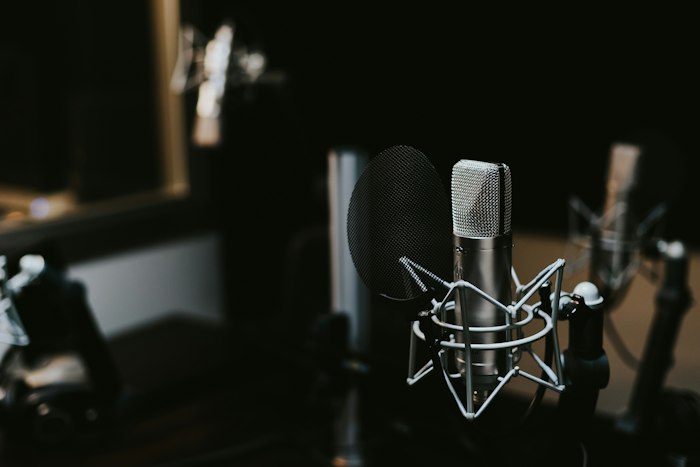
Student wearing headphones practising IELTS listening test with exam-style audio recordings

IELTS Listening Complete Guide

The Listening test is 30 minutes (+ 10 minutes transfer time). You hear each recording only once. There are 4 sections with 40 questions in total. Scores from 0–9 in 0.5 increments.

Test Structure

1
Section 1 Social/Everyday Conversation Two speakers discussing an everyday social topic (booking, enquiry). 10 questions. Easiest section.
2
Section 2 Monologue on General Topic One speaker giving information about facilities, events, or services. 10 questions.
3
Section 3 — Academic Discussion 2–4 speakers in an academic context (tutorial, seminar). 10 questions. Medium difficulty.
4
Section 4 Academic Lecture One speaker giving an academic monologue. 10 questions. Hardest section dense vocabulary and fast pace.
💡Read questions before audio plays predict what you'll hear (name, number, place).
💡Watch spelling "their" not "there", check singular vs plural endings.
💡If you miss an answer, move on immediately. Never stop to think.
💡Use the 10-minute transfer time to check spelling not to rush.
IELTS candidate reading academic texts and practising skimming and scanning techniques for the reading test

IELTS Reading — Complete Guide

60 minutes. 3 passages. 40 questions. Academic module passages are from books, journals, and newspapers. General Training passages include advertisements, notices, and articles. The biggest mistake: reading every word.
Key Question Types

A
True / False / Not Given Most commonly failed question type. "Not Given" ≠ False. The information must not appear in the text at all.
B
Matching Headings Match paragraph headings to paragraphs. Read first and last sentences only that's usually enough.
C
Sentence Completion Answers appear in text order. Use keywords to locate the paragraph, then read only that section closely.
D
Multiple Choice Most time-consuming. Eliminate obviously wrong answers first. Beware of distractors that use words from the text with a different meaning.
💡Spend max 20 min per passage. Move on even if not finished.
💡Never leave a blank guess if you run out of time.
💡True/False/Not Given: if the text doesn't mention it, it's "Not Given."
💡Underline key nouns in questions, then scan for synonyms in the text.
IELTS candidate writing an academic essay for Writing Task 2 with notes and planning on paper

IELTS Writing Complete Guide

60 minutes. 2 tasks. Task 1 = 150 words minimum (spend 20 min). Task 2 = 250 words minimum (spend 40 min). Task 2 counts for twice the marks of Task 1. The biggest band killer: not answering the question fully.

Writing Task 1 — Academic Types

1
Line Graph / Bar Chart / Pie Chart Describe trends, comparisons, and changes. Include an overview this alone is worth 1 full band.
2
Process Diagram Describe a process using passive voice and sequence words (first, subsequently, finally).
3
Map Comparison Describe changes in a location over time using spatial language and present/past tense carefully.
💡Always write an overview in Task 1 it's assessed on the criteria.
💡Task 2: 4-paragraph structure Intro, Body 1, Body 2, Conclusion.
💡Never copy the question prompt verbatim paraphrase it in your introduction.
💡Use a range of cohesive devices not just "however" and "therefore."
IELTS candidate practising spoken English conversation with a tutor for the Speaking test mock interview

IELTS Speaking — Complete Guide

11–14 minutes. Face-to-face with a certified examiner. 3 parts. Recorded. Assessed on Fluency, Lexical Resource, Grammatical Range, and Pronunciation. The examiner wants a natural conversation not memorised scripts.

Test Structure

1
Part 1 — Introduction (4–5 min) Questions about yourself, home, family, work, hobbies. Give 2–3 sentence answers with reasons.
2
Part 2 — Long Turn (3–4 min) 1 min to prepare, 2 min to speak on a cue card topic. Use all 4 bullet points and keep talking for the full 2 minutes.
3
Part 3 — Discussion (4–5 min) Abstract questions linked to Part 2 topic. Give opinions with justification. This is where Band 7+ is won or lost.
💡Use filler phrases when thinking: "That's an interesting question…", "Let me think about that…"
💡Self-correct naturally: "I went sorry, I mean I used to go there every week."
💡Don't memorise scripts examiners penalise rehearsed answers. Be natural.
💡In Part 3, develop your answer: Opinion → Reason → Example → Return to opinion.
📚 Full Curriculum

Complete IELTS Course 32 Lessons Across 8 Weeks

Every lesson is structured, sequenced, and designed with the exact IELTS rubric in mind. Tap any module to see the lessons inside.

🎧

Module 1 IELTS Listening

8 Lessons · Weeks 1–2 · All Sections
+
L1Understanding the IELTS Listening FormatFREE
L2Pre-Reading & Keyword Prediction TechniquesFREE
L3Section 1 & 2 Form Filling & Multiple Choice🔒
L4Section 3 & 4 — Academic Conversations & Lectures🔒
L5Spelling, Numbers, and Names — Common Mistakes🔒
L6Map & Diagram Labelling🔒
L7Full Listening Mock Test 1 + Error Analysis🔒
L8Full Listening Mock Test 2 + Band Score Review🔒
📖

Module 2 — IELTS Reading

8 Lessons · Weeks 3–4 · Academic & General
+
R1Reading Test Format & Time Management StrategyFREE
R2Skimming, Scanning & Keyword TechniqueFREE
R3True / False / Not Given — The #1 Mistake Fixed🔒
R4Matching Headings & Information🔒
R5Sentence Completion & Summary Completion🔒
R6Multiple Choice & Short Answer Questions🔒
R7Academic Vocabulary Builder (250 AWL Words)🔒
R8Full Reading Mock Test 1 + 2 with Analysis🔒
✍️

Module 3 IELTS Writing

10 Lessons · Weeks 5–6 · Task 1 & 2
+
W1How Examiners Mark Your Writing The 4 CriteriaFREE
W2Task 1: Line & Bar Graph LanguageFREE
W3Task 1: Pie Charts & Tables🔒
W4Task 1: Process Diagrams & Maps🔒
W5Task 1: General Letter Writing (3 Types)🔒
W6Task 2: Essay Types — Opinion, Discussion, Problem-Solution🔒
W7Task 2: Introduction & Thesis Statement Writing🔒
W8Task 2: PEEL Body Paragraphs + Cohesive Devices🔒
W940 Topic-Specific Vocabulary Sets (With Collocations)🔒
W10Writing Mock Test + Expert Tutor Feedback🔒
🗣️

Module 4 — IELTS Speaking

6 Lessons · Weeks 7–8 · All 3 Parts
+
S1What Examiners Listen For 4 Criteria ExplainedFREE
S2Part 1: Fluency Techniques & Common Topic BankFREE
S3Part 2: Long Turn Structure & 1-Min Planning Method🔒
S4Part 3: Advanced Discussion Opinion Development🔒
S5Pronunciation, Intonation & Stress Patterns🔒
S62× Full Mock Speaking Interviews with Tutor Feedback🔒
🧪 Practice Tests

Free IELTS Mock Tests — Exactly Like the Real Exam

Our mock tests replicate the exact format, timing, and difficulty of the official IELTS exam. Every test comes with full answer explanations and a band score estimate.

💡 Expert Tips

50 IELTS Tips That Will Raise Your Score

Condensed wisdom from our IELTS tutors and top-scoring students in one power-packed reference.

Listening
1

Read Questions Before Audio Plays

You're given time to read questions before each section. Use every second of it to predict what information you'll hear name, number, or place.

Reading
2

Never Read the Passage First

Go straight to the questions, underline keywords, then skim the passage for those keywords. Reading first wastes 8–10 precious minutes.

Writing
3

Write an Overview in Task 1 — Always

The overview is a single paragraph summarising the 2–3 most striking trends. It's assessed under Task Achievement and worth roughly half a band.

Speaking
4

Use Filler Phrases, Not Silence

"That's quite an interesting question," "Let me think about that for a moment" — these buy you thinking time and show fluency, not weakness.

General
5

Learn the Band Descriptors

Download the public IELTS Band Descriptors and understand exactly what Band 7 vs Band 6 looks like in each skill. Most students never read these.

Listening
6

Never Leave a Blank

There's no negative marking in IELTS. If you're unsure, write your best guess. A blank is definitely wrong a guess might be right.

Reading
7

Not Given ≠ False

If the passage doesn't mention something at all, it's "Not Given." If it mentions it but contradicts the statement, it's "False." This one distinction is worth 3–4 marks.

Writing
8

Plan Before You Write — 3 Minutes

A 3-minute plan for Task 2 means your essay has a clear direction and doesn't go off-topic. Off-topic essays are capped at Band 5 for Task Achievement.

Speaking
9

Self-Correct Naturally

Native speakers self-correct constantly. "I went sorry, I mean I go there every week." Correcting yourself actually demonstrates grammatical awareness to the examiner.

General
10

Simulate Exam Conditions Every Time

Always time yourself when practising. Never pause audio mid-section. Never look up words mid-passage. Simulate real conditions every single practice session.

Listening
11

Watch for Distractors

Speakers often say one thing then correct it: "Tuesday actually it's Wednesday." Write the corrected answer, not the first thing mentioned.

Writing
12

Paraphrase the Question Prompt

Your Task 2 introduction must paraphrase the question. Copying it verbatim is penalised. Change both the sentence structure and key vocabulary.

Reading
13

Answers Follow Text Order

In most question types (except Matching Headings), answers appear in the same order as the questions. Use this to locate answers systematically.

Speaking
14

Record Yourself Speaking

Record yourself answering Part 1 and Part 2 questions, then listen back critically. Most pronunciation and fluency issues become immediately obvious when you hear yourself.

General
15

Analyse Every Mistake Don't Just Move On

After every mock test, create an error log. Note the question type, the mistake, and why you got it wrong. Pattern-tracking reveals your actual weak spots.

IELTS students in an online class receiving expert tips from a certified IELTS tutor via live video session
🏆 Student Results

Real Students. Real Band Scores. Real Life Changes.

Over 5,000 students have used EnglishCareerByte to crack IELTS. Here are just a few of their stories.

❓ Common Questions

Frequently Asked IELTS Questions

Everything students ask us before enrolling answered honestly and in full.

IELTS (International English Language Testing System) is the world's most trusted English proficiency exam, accepted by over 11,000 organisations in 140+ countries. You need it for immigration to the UK, Canada, Australia, and New Zealand, for admission to universities worldwide, and for professional registration in fields like medicine, nursing, and engineering. It tests all four language skills Listening, Reading, Writing, and Speaking and gives you a band score from 1 to 9. Learn more on the official IELTS website →
Requirements vary by country and programme:

🇬🇧 United Kingdom: Skilled Worker visa typically requires Band 6.5 overall (no skill below 6.0). Some professions require Band 7.0+.
🇨🇦 Canada: Express Entry PR typically requires Band 6.0–7.0 overall. Higher scores give more CRS points.
🇦🇺 Australia: Skilled migration requires Band 6.0–7.0 depending on visa subclass and occupation.
🇳🇿 New Zealand: Skilled Migrant Category requires Band 6.5 overall.

Our target is Band 7.5 so you exceed the threshold and improve your chances of approval. Explore our full course →
It depends on your starting level. Most students improve their band score by 0.5–1.0 bands in 6–8 weeks of structured preparation. Students starting from Band 4.5 typically need 3–6 months to reach Band 7.0. Our 8-week course is designed for students already at Band 5.0+ who want to reach Band 7.0–7.5. Download our free 8-week IELTS study plan →
Both tests have the same Listening and Speaking tests. The difference is in Reading and Writing:

IELTS Academic: Texts are complex and academic. Writing Task 1 requires describing visual data (graphs, charts, diagrams). Required for university admission and professional registration.

IELTS General Training: Texts include workplace materials, adverts, notices. Writing Task 1 is a formal or informal letter. Required for work visas, secondary school, and immigration. Our course covers both versions in full.
The IELTS test itself (Listening, Reading, Writing) can be taken on computer at an official test centre. The Speaking test is always face-to-face with an examiner (or via video call for IELTS Online, a home-based option). IELTS on Computer gives you results in 3–5 days vs 13 days for paper-based. Both versions are equally accepted by all organisations. For test centre locations in Pakistan, check the official IELTS test centre finder →
Yes full mock tests are included in every module. The Listening and Reading mocks come with automated scoring and detailed answer explanations. Writing mock responses are submitted to a certified IELTS tutor who returns written feedback within 48 hours with a band estimate and comments on all four criteria. Speaking mocks are conducted live with a tutor and followed immediately by structured feedback. Enroll today via the form below sign up here →

Start Your Journey to Confident English

[fluentform id="3"]

Register for English Course

Choose your course and start learning English with expert tutors.

Secure registration • Free demo class available